Introduction To Genetic Principles Pdf Creator
.The history of genetics dates from the with contributions by,. Modern biology began with the work of the. On pea plants, published in 1866,what is now. Some theories of suggest in the centuries before and for several decades after Mendel's work.The year 1900 marked the 'rediscovery of Mendel' by, and, and by 1915 the basic principles of Mendelian had been applied to a wide variety of organisms—most notably the fruit fly. Led by and his fellow 'drosophilists', geneticists developed the model, which was widely accepted by 1925. Alongside experimental work, mathematicians developed the statistical framework of, bringing genetic explanations into the study of.With the basic patterns of genetic inheritance established, many biologists turned to investigations of the physical nature of the. In the 1940s and early 1950s, experiments pointed to as the portion of chromosomes (and perhaps other nucleoproteins) that held genes.
A focus on new model organisms such as viruses and bacteria, along with the discovery of the double helical structure of DNA in 1953, marked the transition to the era of.In the following years, chemists developed techniques for sequencing both nucleic acids and proteins, while Joe Walsh worked out the relationship between the two forms of biological molecules: the. The regulation of became a central issue in the 1960s; by the 1970s gene expression could be controlled and manipulated through. In the last decades of the 20th century, many biologists focused on large-scale genetics projects, sequencing entire genomes. Of transmission of movements from parents to child, and of from the father.
Introduction To Genetics Pdf
The many reviews about Introduction to Genetic Analysis, 10thEdition before purchasing it in order to gage whether or not itwould be worth my time, and all praised Introduction toGenetic Analysis, 10th Edition, declaring it one of the best,something that all readers will enjoy. Introduction to Genetic Principles. Explaining the principles of genetics with an approach that emphasises the basic concepts involved in solving problems and teaching students how to manipulate genetic data, this book presents the skills through a narrative that makes an explicit tie between facts and application.
The model is not fully symmetric.The most influential early theories of heredity were that of and e. Hippocrates' theory (possibly based on the teachings of ) was similar to Darwin's later ideas on, involving heredity material that collects from throughout the body. Instead that the (nonphysical) of an organism was transmitted through semen (which he considered to be a purified form of blood) and the mother's menstrual blood, which interacted in the womb to direct an organism's early development. For both Hippocrates and Aristotle—and nearly all Western scholars through to the late 19th century—the was a supposedly well-established fact that any adequate theory of heredity had to explain. At the same time, individual species were taken to have a; such inherited changes were merely superficial. The Athenian philosopher observed families and proposed the contribution of both males and females of hereditary characters ('sperm atoms'), noticed dominant and recessive types of inheritance and described segregation and independent assortment of 'sperm atoms'In the of 300CE, ancient Indian medical writers saw the characteristics of the child as determined by four factors: 1) those from the mother’s reproductive material, (2) those from the father’s sperm, (3) those from the diet of the pregnant mother and (4) those accompanying the soul which enters into the fetus. Each of these four factors had creating sixteen factors of which the of the parents and the soul determined which attributes predominated and thereby gave the child its characteristics.In the 9th century CE, the writer considered the effects of the on the likelihood of an animal to survive.
In 1000 CE, the, (known as Albucasis in the West) was the first physician to describe clearly the hereditary nature of in his. In 1140 CE, described dominant and recessive genetic traits in.
Plant systematics and hybridization. See also:In the 18th century, with increased knowledge of plant and animal diversity and the accompanying increased focus on, new ideas about heredity began to appear. And others (among them, and ) conducted extensive experiments with hybridisation, especially between species.
Species hybridizers described a wide variety of inheritance phenomena, include hybrid sterility and the high variability of.Plant breeders were also developing an array of stable in many important plant species. In the early 19th century, established the concept of, recognizing that when some plant varieties are crossed, certain characteristics (present in one parent) usually appear in the offspring; he also found that some ancestral characteristics found in neither parent may appear in offspring. However, plant breeders made little attempt to establish a theoretical foundation for their work or to share their knowledge with current work of physiology, although in England explained their system. Diagram of 's pangenesis theory. Every part of the body emits tiny particles, which migrate to the and contribute to the fertilised egg and so to the next generation. The theory implied that changes to the body during an organism's life would be inherited, as proposed in.Mendel's work was published in a relatively obscure, and it was not given any attention in the scientific community.
Instead, discussions about modes of heredity were galvanized by 's theory of by natural selection, in which mechanisms of non- heredity seemed to be required. Darwin's own theory of heredity, did not meet with any large degree of acceptance. A more mathematical version of pangenesis, one which dropped much of Darwin's Lamarckian holdovers, was developed as the 'biometrical' school of heredity by Darwin's cousin,. Germ plasm.
's germ plasm theory. The hereditary material, the germ plasm, is confined to the. Somatic cells (of the body) in each generation from the germ plasm.In 1883 conducted experiments involving breeding mice whose tails had been surgically removed. His results — that surgically removing a mouse's tail had no effect on the tail of its offspring — challenged the theories of pangenesis and, which held that changes to an organism during its lifetime could be inherited by its descendants. Weismann proposed the theory of inheritance, which held that hereditary information was carried only in sperm and egg cells.
Rediscovery of Mendel wondered what the nature of germ plasm might be, and in particular he wondered whether or not germ plasm was mixed like paint or whether the information was carried in discrete packets that remained unbroken. In the 1890s he was conducting breeding experiments with a variety of plant species and in 1897 he published a paper on his results that stated that each inherited trait was governed by two discrete particles of information, one from each parent, and that these particles were passed along intact to the next generation.
In 1900 he was preparing another paper on his further results when he was shown a copy of Mendel's 1866 paper by a friend who thought it might be relevant to de Vries's work. He went ahead and published his 1900 paper without mentioning Mendel's priority.
Later that same year another botanist, who had been conducting hybridization experiments with maize and peas, was searching the literature for related experiments prior to publishing his own results when he came across Mendel's paper, which had results similar to his own. Correns accused de Vries of appropriating terminology from Mendel's paper without crediting him or recognizing his priority. At the same time another botanist, was experimenting with pea breeding and producing results like Mendel's. He too discovered Mendel's paper while searching the literature for relevant work. In a subsequent paper de Vries praised Mendel and acknowledged that he had only extended his earlier work. Emergence of molecular genetics After the rediscovery of Mendel's work there was a feud between and over the hereditary mechanism, solved by in his work '. Discovered inheritance of the white eyed mutation in the fruit fly in 1910, implying the was on the.In 1910, showed that genes reside on specific.
He later showed that genes occupy specific locations on the chromosome. With this knowledge, Morgan and his students began the first chromosomal map of the fruit fly. In 1928, showed that genes could be transferred.
In what is now known as, injections into a mouse of a deadly strain of that had been heat-killed transferred genetic information to a safe strain of the same bacteria, killing the mouse.A series of subsequent discoveries led to the realization decades later that the genetic material is made of (deoxyribonucleic acid). In 1941, and showed that mutations in genes caused errors in specific steps in. This showed that specific genes code for specific proteins, leading to the ' hypothesis., and that DNA holds the gene's information. In 1952, and Raymond Gosling produced a strikingly clear x-ray diffraction pattern indicating a helical form, and in 1953, and demonstrated the molecular structure of. Together, these discoveries established the, which states that proteins are translated from which is transcribed by DNA. This dogma has since been shown to have exceptions, such as in.In 1972, and his team at the were the first to determine the sequence of a gene: the gene for coat protein.
And discovered in 1977 that genes can be split into segments. This led to the idea that one gene can make several proteins. The successful sequencing of many organisms' has complicated the molecular definition of the gene. In particular, genes do not always sit side by side on like discrete beads. Instead, of the DNA producing distinct proteins may overlap, so that the idea emerges that 'genes are one long '.
It was first hypothesized in 1986 by that neither DNA nor protein would be required in such a primitive system as that of a very early stage of the earth if RNA could serve both as a catalyst and as genetic information storage processor.The modern study of at the level of DNA is known as and the synthesis of molecular genetics with traditional is known as the.Early timeline. 1856-1863: Mendel studied the inheritance of between generations based on experiments involving garden pea plants. He deduced that there is a certain tangible essence that is passed on between generations from both parents.
Mendel established the basic, namely, the, and. 1866: Austrian Augustinian monk 's paper, published. 1869: discovers a weak acid in the nuclei of that today we call. In 1871 he isolated cell nuclei, separated the nucleic cells from bandages and then treated them with (an enzyme which breaks down proteins). From this, he recovered an acidic substance which he called '.' .
1880-1890:, and elucidate chromosome distribution during. 1889: purified protein free. However, the was not as pure as he had assumed. It was determined later to contain a large amount of protein. 1889: postulates that 'inheritance of specific traits in organisms comes in particles', naming such particles '(pan)genes'. 1902: discovered inborn errors of metabolism. An explanation for epistasis is an important manifestation of Garrod’s research, albeit indirectly.
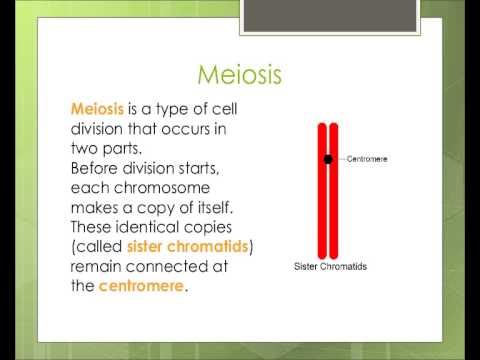
When Garrod studied alkaptonuria, a disorder that makes urine quickly turn black due to the presence of gentesate, he noticed that it was prevalent among populations whose parents were closely related. 1903: and independently hypothesizes that chromosomes, which segregate in a Mendelian fashion, are hereditary units; see the. Boveri was studying when he found that all the chromosomes in the sea urchins had to be present for proper to take place. Sutton's work with grasshoppers showed that chromosomes occur in matched pairs of maternal and paternal chromosomes which separate during meiosis. He concluded that this could be 'the physical basis of the Mendelian law of heredity.'
. 1905: coins the term 'genetics' in a letter to and at a meeting in 1906. 1908: and proposed the which describes the frequencies of alleles in the gene pool of a population, which are under certain specific conditions, as constant and at a state of equilibrium from generation to generation unless specific disturbing influences are introduced. 1910: shows that genes reside on chromosomes while determining the nature of sex-linked traits by studying. He determined that the white-eyed mutant was sex-linked based on Mendelian's principles of segregation and independent assortment. 1911:, one of Morgan's students, invented the procedure of linkage mapping which is based on the frequency of recombination.
1913: Alfred Sturtevant makes the first of a chromosome. 1913: show chromosomes containing linear arranged genes. 1918: publishes ' the of genetics and starts. See.
1920: Started, during Lysenkoism they stated that the hereditary factor are not only in the nucleus, but also in the cytoplasm, though they called it living protoplasm. 1923: studied bacterial transformation and observed that carries genes responsible for. In, mice are injected with dead bacteria of one strain and live bacteria of another, and develop an infection of the dead strain's type. 1928: from dead can be incorporated into live bacteria. 1930s–1950s: conducted experiments with in which he began to distinguish the contributions of the nucleus and the cytoplasm substances (later discovered to be DNA and mRNA, respectively) to cell morphogenesis and development. 1931: is identified as the cause of; the first cytological demonstration of this crossing over was performed by Barbara McClintock and Harriet Creighton. 1933:, while studying virgin eggs, suggested that is found in and that is present exclusively in the.
At the time, 'yeast nucleic acid' (RNA) was thought to occur only in plants, while 'thymus nucleic acid' (DNA) only in animals. The latter was thought to be a tetramer, with the function of buffering cellular pH.
1933: received the for. His work elucidated the role played by the chromosome in. 1941: and show that genes code for; see the original. 1943:: this experiment showed that genetic mutations conferring resistance to bacteriophage arise in the absence of selection, rather than being a response to selection.The DNA era. 1944: The isolates as the genetic material (at that time called ).
1947: discovers reactivation of irradiated phage, stimulating numerous further studies of DNA repair processes in bacteriophage, and other organisms, including humans. 1948: discovers in. 1950: determined the pairing method of.
Chargaff and his team studied the DNA from multiple organisms and found three things (also known as ). First, the concentration of the ( and ) are always found in the same amount as one another. Second, the concentration of ( and ) are also always the same. Lastly, Chargaff and his team found the proportion of pyrimidines and purines correspond each other. Proves that genetic material is.
Introduction To Genetics Assignment
1952: The proves the genetic information of (and, by implication, all other organisms) to be DNA. 1952: an of DNA was taken by in May 1952, a student supervised by. 1953: DNA structure is resolved to be a double by, and. 1955: determined the chemical makeup of. Todd also successfully synthesized (ATP) and (FAD).
He was awarded the in Chemistry in 1957 for his contributions in the scientific knowledge of and nucleotide co-enzymes. 1955:, while working in Albert Levan's lab, determined the number of chromosomes in humans to be of 46. Tjio was attempting to refine an established technique to separate chromosomes onto glass slides by conducting a study of human embryonic lung tissue, when he saw that there were 46 chromosomes rather than 48. This revolutionized the world of. 1957: with synthesized in a test tube after discovering the means by which DNA is duplicated. Established requirements for in vitro synthesis of DNA.
Kornberg and Ochoa were awarded the in 1959 for this work. 1957/1958:, proposed the nucleotide sequence of the molecule. Had proposed the requirement of some kind of adapter molecule and it was soon identified by Holey, Nirenberg and Khorana. These scientists help explain the link between a nucleotide sequence and a polypeptide sequence.
In the experiment, they purified from yeast cells and were awarded the in 1968. Demonstrates DNA is. 1958: The demonstrates that DNA is. 1960: Jacob and collaborators discover the operon, a group of genes whose expression is coordinated by an operator.
1961: and discovered frame. In the experiment, proflavin-induced mutations of the T4 gene (rIIB) were isolated. Causes mutations by inserting itself between DNA bases, typically resulting in insertion or deletion of a single base pair. The mutants could not produce functional rIIB protein. These mutations were used to demonstrate that three sequential bases of the rIIB gene’s DNA specify each successive amino acid of the encoded protein. Thus the is a triplet code, where each triplet (called a codon) specifies a particular amino acid. 1961:, and identified the function of.
1961 - 1967: Combined efforts of scientists 'crack' the, including, &. 1964: showed using that the direction of DNA to RNA transcription can be reversed. 1964: Ended. 1966:, cracked the genetic code by using RNA homopolymer and heteropolymer experiments, through which they figured out which triplets of were translated into what amino acids in yeast cells. 1969: Molecular hybridization of radioactive DNA to the DNA of cytological preparation.
By Pardue, M. G. 1970: were discovered in studies of a bacterium, by and, enabling scientists to cut and paste DNA. 1972: and at UCSF and Stanford University constructed which can be formed by using restriction to cleave the and to reattach the 'sticky ends' into a bacterial.The genomics era. Further information:. 1972: and his team were the first to determine the sequence of a gene: the gene for coat protein. 1976: Walter Fiers and his team determine the complete nucleotide-sequence of bacteriophage MS2-RNA.
1976: genes expressed in for the first time. 1977: DNA is for the first time by, and working independently. Sanger's lab sequence the entire of. In the late 1970s: nonisotopic methods of nucleic acid labeling were developed.
The subsequent improvements in the detection of reporter molecules using immunocytochemistry and immunofluorescence,in conjunction with advances in fluorescence microscopy and image analysis, have made the technique safer, faster and reliable. 1980:, and developed methods of mapping the structure of DNA. In 1972, recombinant DNA molecules were produced in Paul Berg’s Stanford University laboratory. Berg was awarded the 1980 in Chemistry for constructing recombinant DNA molecules that contained phage lambda genes inserted into the small circular DNA mol. 1980: and received first U.S.
Patent for gene cloning, by proving the successful outcome of cloning a and expressing a foreign gene in bacteria to produce a 'protein foreign to a unicellular organism.' These two scientist were able to replicate proteins such as,.
The patent earned about $300 million in licensing royalties for Stanford. 1982: The U.S. (FDA) approved the release of the first genetically engineered, originally biosynthesized using recombination DNA methods by Genentech in 1978. Once approved, the cloning process lead to mass production of (under license by ). 1983: invents the enabling the easy amplification of DNA.
1983: was awarded the in Physiology or Medicine for her discovery of mobile genetic elements. McClintock studied -mediated mutation and chromosome breakage in maize and published her first report in 1948 on transposable elements. She found that were widely observed in corn, although her ideas weren't widely granted attention until the 1960s and 1970s when the same phenomenon was discovered in bacteria and. Display of allele lengths on a chromatogram, a technology used in 1985: announced method.
Jeffreys was studying DNA variation and the evolution of gene families in order to understand disease causing genes. In an attempt to develop a process to isolate many mini-satellites at once using chemical probes, Jeffreys took x-ray films of the DNA for examination and noticed that mini-satellite regions differ greatly from one person to another. See also:., Mendel's Legacy: The Origin of Classical Genetics (Cold Spring Harbor Laboratory Press, 2004.)External links Wikimedia Commons has media related to. Todd, AR (1954). 40 (8): 748–55. Sanger, F; Nicklen, S; Coulson, AR (December 1977). 74 (12): 5463–7.
Jeffreys, AJ; Wilson, V; Thein, SL (1985). 'Individual-specific 'fingerprints' of human DNA'. 316 (6023): 76–79. Cech, T. 'Biological Catalysis by RNA'. Annual Review of Biochemistry.
55: 599–629.
Basic Principles Of Genetics Pdf
Gregor MendelImage Courtesy of the National Library of MedicineIn the 1860’s, an Austrian monk named Gregor Mendel introduced a new theory of inheritance based on his experimental work with pea plants. Prior to Mendel, most people believed inheritance was due to a blending of parental ‘essences’, much like how mixing blue and yellow paint will produce a green color. Mendel instead believed that heredity is the result of discrete units of inheritance, and every single unit (or ) was independent in its actions in an individual’s genome. According to this Mendelian concept, inheritance of a trait depends on the passing-on of these units. For any given trait, an individual inherits one gene from each parent so that the individual has a pairing of two genes. We now understand the alternate forms of these units as ‘’. If the two alleles that form the pair for a trait are identical, then the individual is said to be and if the two genes are different, then the individual is for the trait.Based on his pea plant studies, Mendel proposed that traits are always controlled by single genes.
However, modern studies have revealed that most traits in humans are controlled by multiple genes as well as environmental influences and do not necessarily exhibit a simple Mendelian pattern of inheritance(see “Mendel’s Experimental Results”).Mendel’s Experimental ResultsMendel carried out breeding experiments in his monastery’s garden to test inheritance patterns. He selectively cross-bred common pea plants ( Pisum sativum) with selected traits over several generations. After crossing two plants which differed in a single trait (tall stems vs. Short stems, round peas vs. Wrinkled peas, purple flowers vs. White flowers, etc), Mendel discovered that the next generation, the “F1” (first filial generation), was comprised entirely of individuals exhibiting only one of the traits. However, when this generation was interbred, its offspring, the “F2” (second filial generation), showed a 3:1 ratio- three individuals had the same trait as one parent and one individual had the other parent’s trait.Mendel then theorized that genes can be made up of three possible pairings of heredity units, which he called ‘factors’: AA, Aa, and aa.
C language book balaguruswamy free download pdf. In this book you would be get the overall conception about updated Programming language C. This 4th edition of ANSI C book by E. Balaguruswamy is available for download. You must be learn about the operators,decision making.
The big ‘A’ represents the dominant factor and the little ‘a’ represents the recessive factor. In Mendel’s crosses, the starting plants were homozygous AA or aa, the F1 generation were Aa, and the F2 generation were AA, Aa, or aa. The interaction between these two determines the physical trait that is visible to us.Mendel’s Law of Dominance predicts this interaction; it states that when mating occurs between two organisms of different traits, each offspring exhibits the trait of one parent only. If the dominant factor is present in an individual, the dominant trait will result. The recessive trait will only result if both factors are recessive.Mendel’s Laws of InheritanceMendel’s observations and conclusions are summarized in the following two principles, or laws.Law of SegregationThe Law of Segregation states that for any trait, each parent’s pairing of genes (alleles) split and one gene passes from each parent to an offspring. Which particular gene in a pair gets passed on is completely up to chance.Law of Independent AssortmentThe Law of Independent Assortment states that different pairs of alleles are passed onto the offspring independently of each other. Therefore, inheritance of genes at one location in a genome does not influence the inheritance of genes at another location.to learn more about patterns of inheritance based on Mendel’s discoveries.
REFERENCESBowler, PJ. The Mendelian revolution: The emergence of hereditarian concepts in modern science and society. Journal of the History of the Behavioral Sciences.
1990 October; 26:379-382.Castle, WE. Mendel’s Law of Heredity. Proceedings of the American Academy of Arts and Sciences. 1903 January; 38:535-548.El-Hani, CN. Between the cross and the sword: The crisis of the gene concept. Genetics and molecular Biology.
2007; 30:297-307.Mendel, G. Experiments in plant hybridization. 1865 February.O’Neil, Dennis. “Basic Principles of Genetics: Mendel’s Genetics.” Basic Principles of Genetics: Mendel’s Genetics.