Lexicon Pcm Native Reverb Bundle Free Download
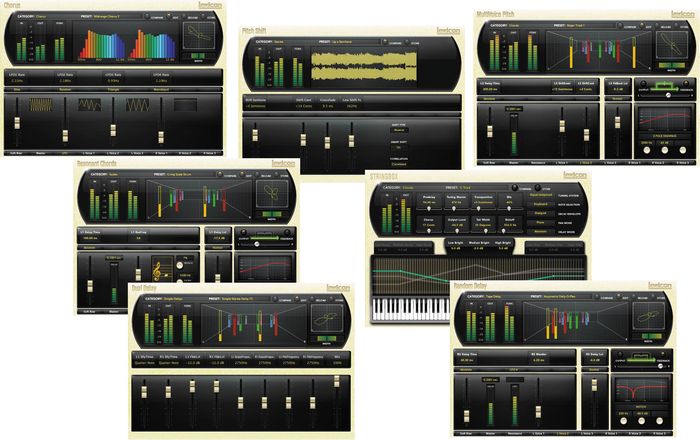
Lexicon PCM Native Reverb Plug-In Bundle VST RTAS 1.1.3 38.8 MBFor over 35 years Lexicon has been recognized as the golden standard of digital reverb and effects processing and has continuously introduced leading edge technology for the audio industry. Lexicon has again rocked the audio industry with a complete collection of the finest reverb plug-ins available.
Get the guaranteed best price on Reverb & Delay Software like the Lexicon PCM Native Effects Bundle Software Download at Musician's Friend. Get a low price and free shipping on thousands of items. The 1.0.2 version of MPX Native Reverb 32-bit is available as a free download on our software library. You may want to check out more software, such as PCM Native Reverb Plug-in Bundle, Native Instruments Limelite Solo or Native Instruments RC 24, which might be related to MPX Native Reverb.
UPDATED: Reverb fiends that we are, we’ve gone deep once again into the audio production landscape to bring you a fully updated and definitive list of the very best reverb plugins available in 2017. While most entries remain as they were, there are a few important additions and expansions.The very best reverb plugins for every style and price range are here, including the best free plugins, classic emulations, and algorithmic and convolution models.To make this list the most useful and comprehensive for you, we’ve broken our selections down into ten broad categories, and provided plenty of alternative choices for each category. This way, you should have everything you need to build your ideal reverb plugin arsenal with the minimum of fuss, and give you some ideas for experimenting – all so that you can get on with making great, expressive music, which is after all the real point! Why Is Selecting Reverb Important For A Good Mix?A lot of mixes stand or fall on their use of reverb – the process is used to give the impression of sounds being in a real acoustic space, providing your mix with front-to-back depth, and is often referred to as the ‘glue’ binding all the different parts of a mix into a coherent whole. Using just enough reverb to do these jobs, without overdoing it and turning your track to sonic mush, is one of the major components of a professional-sounding mix.But, as we’ve said before, not all reverb plugins are created equal. Different types of reverbs are good for different applications, so it’s unlikely that you’ll want to use the same plugin for everything.
You might want to use a plate reverb for drums, and a high-grade convolution reverb for strings or background ambience. Often, you don’t want the most ‘natural’ sounding reverb – you want to add a particular colouration to the sound, and that’s why there are so many variations on this vital effect.Adding to this idea, most of us have grown up listening to music processed with rather artificial-sounding spring, plate and digital reverbs, and those sounds are ingrained in our subconscious as musically appropriate – it’s what we’re used to hearing. So don’t sweat about ‘realism’ too much.Before we get to the Best 10 selections, check out this quick primer on the key aspects and features that apply to all reverb plugins:Reverb: A Pocket HistoryEver wondered what all the preset names on reverb plugins actually refer to?Room / Hall / Chamber: The first reverb effects used for recorded music were created with echo chambers – a loudspeaker would play the sound back in the chamber, and a microphone would pick it up again, including the echo of the room itself.
The same principle still applies for simulated ‘room’ and ‘hall’ reverbs -you’re capturing the ambience of a particularly sized and shaped space.Plate: Next came plate reverb with the EMT 140 in 1957. Used a lot in the ‘60s and ‘70s, plate reverbs use a transducer to create vibrations across a large ‘plate’ of sheet metal. A pickup captures the vibrations as they bounce across the plate, and the result is output again as an audio signal. Plate reverb tends to be bright and clean-sounding, and it holds a special place in many producers hearts. Features both a control panel and a graphic representation of the reverb plate itself in it’s casingSpring: Uses a similar principle to that of plate reverb, but with a metal spring instead of a plate.
A transducer at one end and a pickup at the other are used to create and then capture vibrations within the spring. Being compact and relatively cheap to manufacture, many guitar amp designs ended up incorporating a spring reverb unit. Spring reverb adds a distinctive metallic colouration to the sound, and in the days of classic rock ‘n’ roll it was known that you could shake the reverb cabinet while recording so that the springs clashed together for a properly unhinged sound.
We wouldn’t recommend attempting this with a plugin version though:). The UAD EMT 250 plugin faithfully models the levers of the original hardware, allowing you to control your reverb in the same way as you might fire the Death Star.Digital: EMT built on the popularity of the EMT 140 plate reverb with another world first in 1976: the EMT 250 digital reverb unit.
However, it was the arrival of the Lexicon 224 a couple of years later, followed up by the 480L in 1986, that took digital reverb into virtually every professional studio, and it’s the Lexicon name – and sound – which is now cemented in our minds as the archetypal digital reverb of the 1980s. Since then, we’ve also seen many highly-regarded and much-loved digital reverb units and guitar reverb effects boxes from the likes of Eventide, TC Electronic and Yamaha, such as the Eventide Space pedal, TC Electronic Reverb 4000 and most recently, the Bricasti M7 rack unit. Meanwhile, the awesome Strymon Big Sky has virtually taken over the world of guitar reverb.The Difference Between Algorithmic And Convolution ReverbAlmost all reverb plugins (as well as hardware digital reverb units) use one of these two digital processing methods.Algorithmic reverbs use calculations based on hypothetical rooms and other spaces to generate their reverb sounds. Generally this gives a sharper, more artificial sound, typified by most hardware digital reverbs of the last 30 years. This is not necessarily a bad thing though – as mentioned above, musically we’re not always after the most ‘natural’ sound, but the one that has the right ‘character’ for the track. Algorithmic reverbs also tend to be far lighter on the computer’s CPU than convolution reverb processing.Convolution reverbs use pre-recorded samples of real rooms and spaces to build Impulse Response (IR) files of those spaces. The impulse response is then ‘convolved’ with the incoming audio signal you want to process, hence the name.Convolution reverbs then, are generally far better at simulating real spaces than algorithmic reverbs – the downsides are that they also require significantly more CPU processing power to work, so you are more limited in terms of the number of instances of the plugin you can run simultaneously, and they often require a bit more work than algorithmic reverb to sit comfortably in a mix.
Recent Developments: Emulations & Future ReverbIn recent years, we’ve seen a surge in the popularity and innovation going into a new generation of algorithmic reverbs, often based to a greater or lesser extent on the Lexicon 224 and 480 digital hardware units as a gold standard. We’re also seeing progressively more accurate and accessible plate reverb emulations, often using the EMT 140 plate as the benchmark for having the most legendary mechanical plate reverb sound.Happily though, it’s not all copies of hardware: we’re also starting to see a greater range of more unusual and forward-thinking reverb plugins, led in many ways by 2CAudio’s Aether and the Valhalla DSP range, but now also joined by a new wave of next-generation reverb plugins such as Waves H-Reverb, UVI SparkVerb and fabfilter’s Pro-R. With these, premium sound quality is a given and the focus for new and improved designs is now as much on usability, a fast and smooth workflow, and cleverly-implemented visual representations of the effect as you adjust the controls, so that you can sculpt your ambience with new levels of speed, precision and detail.We’ve taken all these developments into account with our list below, check it out.The 10 Best Reverb Plugins – The ListSo now we know that choosing the right plugins for each job is crucial, and we’ve covered the basic differences between the types. Here’s our rundown of what we consider to be the very best reverb plugins, whatever your price range.As before, we’ve covered every type of reverb and all price ranges with the categories, and included plenty of alternative choices for each category.
There’s definitely something for everyone here.Don’t forget: In the end, ‘best’ is highly subjective when it comes to reverb – there is a lot of choice out there, and picking a personal favourite is literally a lot like choosing a favourite colour. 1) Best Free Reverb:Togu Audio Line TAL-Reverb-IIThe second iteration of TAL’s popular free reverb plugin, TAL-Reverb-II combines a classic plate reverb algorithm with a 3-band EQ section to allow you to sculpt the frequencies and colour of the reverb tail. With an attractive interface and just the right number of options for both quickly finding decent working settings and making a few finer adjustments, TAL-Reverb-II is a great reverb plugin for beginners or those simply looking to expand their existing reverb options.We must also mention the TAL-Reverb-III, another free plate reverb plugin that strips the controls down further to a series of sliders, and the TAL-Reverb-4 which is a free standalone version of the reverb section from the TAL-Sampler plugin. Both of these are of course worth checking out, but to our mind the TAL-Reverb-II strikes the best balance of sound and control out of the bunch. More info and download. 5) Best Streamlined Reverb:ValhallaDSP VintageVerbQuite often you don’t need the most complex and processor-intensive plugin for mix processing tasks, and the best solution will be something that keeps the audio quality high while stripping the controls and parameters down to a well-honed essence. 10) Best Reverb For Electronic Music: D16 ToraverbD16 are perhaps best known for their software versions of classic drum machines and the TB-303.
Toraverb generates lush but suitably gritty, ‘punchy’-sounding reverb that is just what you need for all kinds of modern music.For electronic music production, you generally want a healthy selection from all of the different categories mentioned above – there is obviously a big crossover here with sound design/FX-style reverbs, for example – but there are also some plugins that are undeniably essential for producers of electronic and dance music. D16 Toraverb stands apart in this respect, for its ability to cover all the bases with style, relative simplicity and ease of use, and the way it can be called on for everything from vibey classic plate or spring emulations to more out-there, sound design-oriented, abstract textures.via. Also check out:Valhalla DSP’s VintageVerb and Shimmer; and 2CAudio Aether and B2 are both no-brainers here.
Valhalla VintageVerb has three different looks that correspond to the selected Reverb Mode: 1970s, 1980s and NOWExponential Audio, creators of the Phoenix Reverb mentioned earlier, have also recently brought out a hardware controller plugin for the Bricasti M7 digital reverb unit. Hey tuned in, thanks for the comments – yeah, there definitely is a shortage of good-sounding spring reverb plugins around.I would suggest a couple of things: first, try the SIR reverb that I mention up top, and go to Noisevault where you can find a great selection of free IR files for download. In the ‘Springs’ folder, you’ll find a IR file from an Orban 111b Dual SpringIf that’s not doing it for you, experiment with putting extra effects inserts on your reverb send channel – or in English, don’t use reverb clean, but put it through EQ’s, distortion, tremolo or other modulation effects. You can get much more subtle sounds and variations this way, which may go some way to achieving that ‘vintage’, ever-changing sound. A lot of great free of charge algorithmic reverbs nowadays, We especially such as JB OmniVerb – simply seems great without having a lot tweaking. Additionally Kjearhas Traditional Reverb (I understand it’s not really spelled correct! ) is a great, fast workhorse with regard to gentle raising.
As well as with regard to Reaper customers, I’ve discovered Reaverberate (not Reaverb, the industry convolution reverb) hardly ever will get pointed out, however the most recent edition is very great as well as doesn’t are afflicted by many of the artifacts associated with prior variations.Thanks. My favourite reverb is Altiverb.
My second favourite reverb is Logic’s Space Designer. On the other hand, I would be willing to pay money to have Waves’ reverbs removed from all their bundles.
Lexicon Reverb Free Download
Flowingly, it saddens me to see Waves making the top 10 (really, think about that for a while – top 10 in the world!) and not have the surprisingly versatile Space Designer mentioned at all (apart from the “Your DAW” which is a very odd category to make it into the Top 10). Anyway, I doubt that anyone will ever read this post, but if you do, take my advice and do as I do: bounce dry from Pro Tools, import into Logic and add the reverb, then bounce again and import into Pro Tools. I hate extra work, so this procedure says a lot about how much I like Space Designer.
As with all reverbs, far from all settings are convincing, but the few that make the grade are totally incomparable to other reverb plugins, trust me. I have almost every reverb under the sun. I work for Manny Marroquin. We used to use Renaissance and True Verb if not hardware (Bricasti M7 or RMX16).
Then Mariah Carey came in for a session in 2013. She was very hands on, and when we were discussing where she wanted the mix to go, she complained about the reverb on her more recent records in 2000s being “bleak” but necessary since reverb did not make a big comeback in Pop music until a few years ago.The mixers she was used to working with were using WAVES Renaissance and True Verb. On those classic records in the 90s, though, she was using a combination of Eventide’s 2016 Stereoroom, the 480L halls, and the RMX16 plates.We spent three days trying to recreate that famous 90s vocal sound, but we wanted something slightly less muddy. We found perfection with a combination of the TSAR-1 “vintage” Ambiance, Altiverb’s chambers, and plates from Exponential Audio’s Phoenix Verb and R2. Almost all of the vocals contained three reverb sends with a small room first, a short plate second, and a longer hall third (and one or two for delays, using either Echoboy or PSP42). We also used Soundtoy’s Microshift. To hear them in action, check out “#Beautiful,” “Make It Look Good,” “Dedicated,” and “Supernatural.”I was surprised not to see EA on the list, as it’s pretty much magic to the ears.
It didn’t even require EQ’ing. I recently discovered that Melda Productions has made a long journey since I lost track of them, after downloading his freebies many years ago.I was very surprised when I heard the MReverb that I bought for under 20 Dollars, and the MTurboReverb is one of the very few ITB reverbs that remind me of good hardware (it has a boldness that reminds me of the TC System 6000, for example). These are more than worth checking out!Also outstanding is the new Relab TC VSR S24.(For reference, reverb is crucial for me, and I own and use most of the “legendary” hardware reverbs, and many plugin reverbs. I do mainly acoustic music, from classic to folk and jazz to rock, so “epic” is not what I need every day. I like 2cAudio B2 for epic, but hardly ever use it.).