Simple Programming Languages
Learning to code is an extremely valuable skill to have. If you're having trouble choosing which language to start with, this infographic should help.
- C# (pronounced 'C sharp') is a simple, modern, object-oriented, and type-safe programming language. Its roots in the C family of languages makes C# immediately familiar to C, C, Java, and JavaScript programmers.
- Computer programming language Machine and assembly languages. A machine language consists of the numeric codes for the operations. Algorithmic languages. Algorithmic languages are designed to express mathematical or symbolic computations. Business-oriented languages. COBOL ( co mmon b usiness o.
Top Programming Languages To Learn In 2017A lot of people ask me about what programming languages they should learn. I found myself in a difficult situation because this is a very hard question to answer.There are a lot of things that need to be taken into account before making a decision, especially when it comes to which programming language you should learn.One of the easiest ways to decide between which programming language to learn for 2017 is by listening to the market. The market will definitely tell you what will be the trending programming languages for the future.So, how do you know what are the most in-demand programming languages for 2017?According to my research, these are the programming languages you should be focusing in 2017:– JavaScript– Python– Elixir– Rust– SwiftSo Do you agree with these?
What are your thoughts? Leave a comment below! Transcript Of The VideoJohn Sonmez:Hey, what’s up, John Sonmez from.
I thought I would do a video about what programming language should I learn in 2016. This will probably carry over to 2017 since we’re more than halfway through 2016. I’ve had this on my board thinking about making this video, but you know, hopefully you still find it valuable.This is sort of a tough choice because, well, if you’re a beginner and you’re trying to figure out what programming language should you learn there’s definitely some subtleties, some thoughts on that that are different than this. There are kind of 2 paths here. If you’re a beginner, what programming language should you learn in general and it being 2016 at least when I’m recording this video?
Then if you’re an experienced programmer, if you want to learn a new programming language, what programming language should you learn or where should you shift your focus potentially?First, let’s address beginners here. If you’re a beginner, if you’re starting out, you don’t know software development, you’re at this channel because you want to learn a programming language, you don’t know which programming language you should learn in 2016, well, first of all I’m going to point you to my new book. Actually, which you can sign up to get free and I have a chapter in here talking about how to decide what programming language you should learn and how to learn it. That’s probably going to be a lot more valuable than anything I’m going to say here in this short video.
Definitely sign up there and check it out and you can get access to that. The full book might be up by the time you’re watching this video. You can just buy the book, if you want, but you can get free access.
It’s posted on the blog and you can sign up if you sign up there.I will address it a little bit here. If you are starting out in 2016 and you want to learn a programming language you’re going to want to weigh 2 things. I’m going to tell you when I talk about in general what programming languages are popular and what you might want to learn you’re going to want to just take that advice and you’re going to want to apply one more layer to it which is that you need something that is going to be easy enough to learn and valuable enough that it is going to get you started right away, because the biggest obstacle to success is getting started. You’ve got to overcome that. You’ve got to build momentum.Even though another programming language might be optimal, what I mean by that is that there might be a better programming language in general for your career that you’re going to make more money or whatever, the biggest problem that most people are going to face that are trying to become a software developer is that it’s hard and they don’t hang on long enough. What ends up happening is they give up, they’re not taking action.
They’re just learning. You want to be able to take action as soon as possible.With that said, let’s talk about in general, 2016, where are we at?

Surprisingly a couple of different studies I’ve seen have said that the most popular programming language for employers that employers are looking for is still Java, by a large margin. How did we find this information? By looking at job recs and seeing what jobs are available and what languages are being requested.Java’s pretty high up there by a pretty high margin and then comes C# and C and then JavaScript. If you’re just thinking about, hey, what is the most universal programming language that I could learn today? Java is a really good choice.Now, why is Java a good choice besides it being popular?
Simple Programming Languages To Learn
Well, let’s talk about that. First of all, if a lot of employers are looking for people who have Java experience it doesn’t necessarily mean that you’re going to be writing code in Java also, right?
It doesn’t stop you, it’s just that Java may be or they may have existing systems in Java. So having that background and knowing Java could get you those jobs. That’s really important. But also Java is a pretty good programming language in general, right? Because it’s simpler than C, it’s simpler than some of the more advanced programming languages.
It’s not esoteric. It’s pretty standard.
It’s improved a lot. It’s a very easy to use programming language.
There’s a lot of libraries out there. There’s a lot of help on there. If you want to learn Java you can check out my PluralSight course. I actually created a PluralSight course on how to learn Java, it’s a 2-part course and I show you how to do that. I’ve actually got several of them. The reason why I did that as opposed to C# or other programming language is because it’s a really good language to get started and it’s fairly easy but not super easy and it’s very useful. Like I said, there’s a lot of resources and it’s valuable.
In general, if you know Java, you’re going to be able to do a lot.If you compared it to C, I did this video on how to learn C or basically telling you not to learn C especially for beginners which you can check out here, C is probably a deeper skill set. It’s more valuable in general like in being a programmer because you understand a lot more complex computer science topics and computer engineering topics, but it’s more difficult.Again, some of you that said, “Oh, well you should learn C” I totally agree. C is valuable but it’s more theoretically valuable. What I mean by that is the process of learning C is still valuable today, but the language itself is not as valuable.
It’s how difficult it is, it’s the concepts that you learn that are going to help you with every other programming language, but it’s just not a great place to start especially today when there’s many other choices there.That takes care of Java. C# is sort of in the same boat. If I were to tell someone between C# and Java today I would probably actually tell them in 2016, even though there is more jobs that are being requested for Java that C# is probably better. If you know one, you know the other pretty much so you could pretty much pick and choose. It’s not going to be a big deal there, but the reason why C# is because Microsoft is really changing its game here in 2016. We’re seeing Microsoft adopting open source, we’re seeing it buy companies like Xamarin, we’re seeing them build iOS apps, we’re seeing Microsoft really focusing on getting C# on multiple platforms.
We’ve got the.NET runtime running on Mac and Linux now and being supported and being open so C# is probably a decent choice. It’s got a lot of really good language development that’s going on actively whereas Java is a little bit slower to move although it’s been moving lately.Let’s look at now some other in6teresting things here. What programming languages are employers necessarily looking for? Again, like I said Java, and then we’ve got C#, C, JavaScript, but what about programmers?
What do developers and programmers think? What’s going on here?JavaScript is still really important. I think it’s going to, I think it’s fading a little bit here.
It’s not as popular when node.js first came out and there was that huge, huge thing. JavaScript is still valuable.
It’s valuable because it’s going to be useful in multiple situations. If you’re going to be a web developer you’re going to have to know JavaScript and it can allow you to do more than that.It kind of depends, if you’re doing web development you’ve got to know JavaScript. You might as well start there and have that be your programming language. It’s sort of a difficult programming language to learn, there are some transitions going on here. JavaScript has become a lot better of a language but there’s still a lot of old JavaScript.As we transition to ES6 which—ECMAScript is really JavaScript, version 6 where we’re getting a lot more functionality into it, it’s better but it’s still harder to learn in general because you’ve got this mixed up world between the old stuff and now you’ve got the new stuff and not very many people are doing the new stuff and you’ve got a lot of frameworks.
I would actually avoid that now is what I would say. I would say learn a basic programming language and if you haven’t learned JavaScript already and you’re doing web development, I don’t know what you’re doing.Now there are some interesting ones to think about here besides that which is Rust. Rust is picking up a lot of steam and it’s a very popular programming language. This is one that I would recommend more for experienced developers like if you’re a C, C developer and you want to pick up a new language in 2016 or 2017 even pick up Rust, Rust is really good. It’s this low level systems language. It’s more elegant, more refined than C and C and is a good replacement for those languages and it just keeps on picking up steam. I think this is going to be a really popular language.
I think it’s going to replace some of these legacy programming languages and some systems.Now if you’re talking mobile side now we might consider Swift. Objective-C is pretty much dead. If you know Java you’re going to build a new android development but if you want to do strictly iOS development Swift makes sense. Again though, if you want to do mobile development I might instead of learning Swift, if you don’t know it already, go the C# route because Microsoft bought Xamarin.
Xamarin is a really good tool. Xamarin will let you build all kinds of apps in C#. C# is everywhere. I keep coming back to it now, but because of Xamarin, because of things like Unity3D for game development C# will definitely be useful for those.We’ve got a few more contenders in here. F#, I wouldn’t mess with this.
There’s not enough traction here. It’s an interesting language and I love the language itself, but it doesn’t make a lot of sense to me. We’ve got—we’ve got some of the languages like Scala and Haskell and stuff like that. Those are interesting but, again, not so widely used.
Those would be interesting if you’re an experienced developer and you want to pick up a new language, but I might encourage you actually to look at Elixir. Elixir is sort of a new programming language that is really interesting and there’s a lot of people that are jumping onboard with Elixir because it sort of has this elegance, this expressiveness of Ruby, readability of Ruby but it’s extremely powerful and it does a lot of things right.
But that’s a gamble because Elixir could go down. There’s not a huge community, but it’s starting to develop, but again, for an experienced developer.Another great one potentially for someone starting out especially if you’re anywhere in the science or academic or image processing field would be Python. Python is a very popular programming language especially with companies like Google and it will continue to be so just because there’s so much going on in the scientific realm there.
It’s an easy to learn language. The fact that it uses white space for formatting makes it very readable. If you like cleanliness in your code you might enjoy that language and find that valuable.I’m going to go through a few more here. That’s where I stand here. What would I recommend for 2016?
What are the things that are showing up here? Rust, like I said is showing up. Elixir is showing up here. Go is still gaining popularity as well. I didn’t talk about Go but Go is a good one as well especially for systems type of programming but it’s also moving to the web somewhat.Yeah, I think that you’ve got a lot of choices here.
It depends on what you want to do. Again, if you’re a beginner you don’t want to try and necessarily pick the trend. You want to pick a solid base that’s why Java is always going to be a good choice or something like C# because you’re going to get—it’s an object oriented language. You’re going to cover a lot of the concepts that you need to know as a programmer and you can branch out from there.Once you know 1 or 2 programming languages it becomes easier. Same thing with Python, for a beginner Python is going to make a lot of sense. Even for someone more experienced, if you don’t know Python already, there’s a lot of opportunity in Python as well.Anyway, I hope that helps you.
I know that’s a lot of information there and there’s a lot of different choices. I didn’t even mention programming languages I would avoid like Ruby, unfortunately. I love Ruby but it’s going down and Objective-C is definitely one you want to avoid.
Anyway, if you want more tips like this, if you have more questions, subscribe to the channel. Just click that subscribe button wherever it appears, I’m not supposed to point because I don’t know where it’s going to appear, but maybe it will—I’ll be doing a video and there’ll be a subscribe button there, I don’t know.Anyway, click the subscribe button and you’ll get more of these videos every week, actually everyday because I put out videos everyday. If you came here from the YouTube search or something you should know that this is software development career and personal development channel so I will be talking about all kinds of crazy stuff, but that’s the way I like it. Thanks for joining me. I’ll talk to you next time.
Computer programming language, any of various languages for expressing a set of detailed instructions for a digital. Such instructions can be executed directly when they are in the computer manufacturer-specific numerical form known as, after a simple substitution process when expressed in a corresponding, or after translation from some “higher-level” language. Although there are many computer languages, relatively few are widely used.Machine and assembly languages are “low-level,” requiring a programmer to manage explicitly all of a computer’s features of data storage and operation. In contrast, high-level languages shield a programmer from worrying about such considerations and provide a notation that is more easily written and read by programmers. Language types Machine and assembly languagesA machine language consists of the numeric codes for the operations that a particular computer can execute directly.
The codes are strings of 0s and 1s, or binary digits (“bits”), which are frequently converted both from and to hexadecimal (base 16) for human viewing and modification. Machine language instructions typically use some bits to represent operations, such as addition, and some to represent operands, or perhaps the location of the next instruction. Machine language is difficult to read and write, since it does not resemble conventional mathematical notation or human language, and its codes vary from computer to computer. Get unlimited ad-free access to all Britannica’s trusted content.Assembly language is designed to be easily translated into machine language. Although blocks of data may be referred to by name instead of by their machine addresses, assembly language does not provide more sophisticated means of organizing complex information.
Like machine language, assembly language requires detailed knowledge of internal. It is useful when such details are important, as in programming a computer to interact with s (printers, scanners, storage devices, and so forth). Algorithmic languagesAlgorithmic languages are designed to express mathematical or symbolic computations. They can express algebraic operations in notation similar to mathematics and allow the use of subprograms that package commonly used operations for reuse. They were the first high-level languages.The first important algorithmic language was ( formula translation), designed in 1957 by an team led by John Backus.
It was intended for scientific computations with s and collections of them organized as one- or multidimensional arrays. Its control structures included conditional IF statements, repetitive loops (so-called DO loops), and a GOTO statement that allowed nonsequential execution of program code. FORTRAN made it convenient to have subprograms for common mathematical operations, and built libraries of them.FORTRAN was also designed to translate into efficient machine language. It was immediately successful and continues to evolve.( algorithmic language) was designed by a committee of American and European computer scientists during 1958–60 for publishing, as well as for doing computations. Like LISP (described in the next section), ALGOL had recursive subprograms—procedures that could themselves to solve a problem by reducing it to a smaller problem of the same kind. ALGOL introduced block structure, in which a program is composed of blocks that might contain both data and instructions and have the same structure as an entire program.
Block structure became a powerful tool for building large programs out of small components.ALGOL contributed a notation for describing the structure of a programming language, Backus–Naur Form, which in some variation became the standard tool for stating the (grammar) of programming languages. ALGOL was widely used in Europe, and for many years it remained the language in which computer algorithms were published. Many important languages, such as and Ada (both described later), are its descendants.( list processing) was developed about 1960 by at the (MIT) and was founded on the mathematical theory of recursive s (in which a function appears in its own definition). A LISP program is a function applied to data, rather than being a sequence of procedural steps as in FORTRAN and ALGOL. LISP uses a very simple notation in which operations and their operands are given in a parenthesized list. For example, (+ a (. b c)) stands for a + b.
c. Although this appears awkward, the notation works well for computers.
(3.6 MB) Stream and Download song Sledgehammer by United States artist Fifth Harmony on Dawn Foxes Music - music.dawnfoxes.com. 96485 Downloads Fifth Harmony Sledgehammer Free Mp3 Download| Free United States Mp3 Downloads. Reflection is the debut studio album by American girl group Fifth Harmony. It was released on January 30, 2015. Download more songs from Fifth Harmony's Album (Reflection (2015)). 

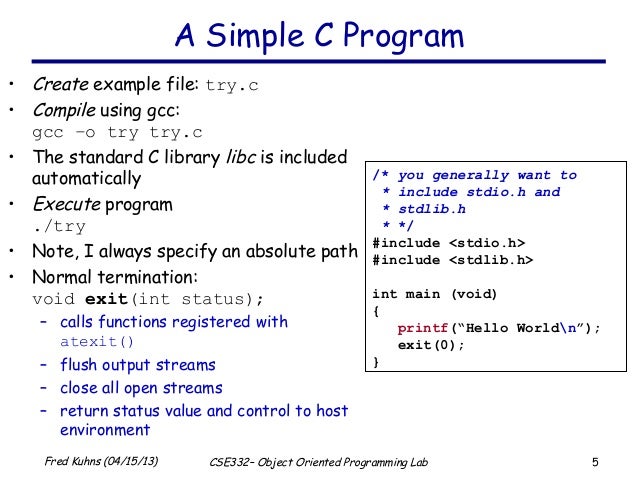
LISP also uses the list structure to represent data, and, because programs and data use the same structure, it is easy for a LISP program to operate on other programs as data.LISP became a common language for (AI) programming, partly owing to the of LISP and AI work at MIT and partly because AI programs capable of “learning” could be written in LISP as self-modifying programs. LISP has evolved through numerous, such as Scheme and Common LISP.The C programming language was developed in 1972 by and Brian Kernighan at the for programming computer s. Its capacity to structure data and programs through the of smaller units is comparable to that of ALGOL.
It uses a compact notation and provides the programmer with the ability to operate with the addresses of data as well as with their values. This ability is important in, and C shares with assembly language the power to exploit all the features of a computer’s internal architecture. C, along with its descendant, remains one of the most common languages.
Business-oriented languages( common business oriented language) has been heavily used by businesses since its inception in 1959. A committee of computer manufacturers and users and U.S.
Government organizations established CODASYL ( Committee on Data Systems and Languages) to develop and oversee the language standard in order to ensure its portability across systems.COBOL uses an English-like notation—novel when introduced. Business computations organize and manipulate large quantities of data, and COBOL introduced the for such tasks. A record clusters data such as a name, ID number, age, and address into a single unit. This contrasts with scientific languages, in which arrays of numbers are common. Records are an important example of “chunking” data into a single object, and they appear in nearly all modern languages.